
In Islamic sacred law, major ritual impurity (Hadath Akbar) prevents a Muslim from engaging in essential acts of worship, such as performing the daily prayers (Salah), reciting or touching the Holy Quran, circumambulating the Ka’bah (Tawaf), and remaining inside a mosque. To attain full ritual purity and restore spiritual eligibility for these sacred deeds, a complete ritual bath known as Ghusl is mandated. The Hanafi school outlines precise legal guidelines to ensure that this purificatory rite is executed in accordance with classical jurisprudence.
When Does Ghusl Become Absolutely Obligatory (Fard)?
In Hanafi jurisprudence, Ghusl is required upon the occurrence of specific physical events that trigger major impurity. These causes include:
- 1. The Emission of Semen (Mani): When ejaculation occurs with sexual desire (Shahwah), whether due to marital intimacy or erotic nocturnal dreams (Ihtilam), upon awakening and discovering seminal discharge.
- 2. Marital Intercourse: The insertion of the head of the penis (glans) into the female passage, regardless of whether ejaculation actually takes place. The physical act itself legally establishes major impurity for both spouses.
- 3. Cessation of Menstruation (Hayd): Once a woman’s regular menstrual bleeding concludes (up to the maximum Hanafi duration of ten days and ten nights), a complete Ghusl is mandatory before resuming Salah and fasting.
- 4. Cessation of Post-Natal Bleeding (Nifas): The bleeding following childbirth, which has a maximum legal duration of forty days in Hanafi Fiqh. Upon its termination, Ghusl becomes obligatory.
- 5. Washing the Deceased Muslim: Preparing the body of a deceased Muslim for burial requires an obligatory bath performed by fellow believers.
The Three Fundamental Obligations (Fara’id) of Ghusl
Unlike minor ablution, which comprises four obligatory acts, classical Hanafi authorities identify three core integrals (Fara’id) that must be fulfilled for Ghusl to be legally valid. If any of these three requirements is missed, even partially, the ritual impurity remains unresolved:
- Thoroughly Rinsing the Mouth (Madmadah): Water must reach every internal surface of the mouth, including between the teeth, the back of the gums, and the palate. If one is not fasting, gargling deeply up to the throat is strongly emphasized to ensure absolute coverage.
- Cleansing the Interior of the Nostrils (Istinshaq): Sniffing water deeply into both nasal cavities up to the soft, flexible cartilage of the nasal bone. Any dried nasal mucus or debris must be completely cleared away so that water directly contacts the skin beneath.
- Washing the Entire Surface of the Body Once: Pouring water over every square millimeter of the external body, from head to toe. This encompasses all hair, ear crevices, the navel cavity, behind the knees, between the buttocks, and underneath long fingernails. Not a single dry spot the width of a needlepoint may remain unwashed.
Rulings on Women’s Braided Hair: According to the established Hanafi ruling, a woman whose hair is tightly braided is not legally required to undo her braids for Ghusl, provided that water thoroughly reaches the roots and scalp beneath the braids. However, if water cannot penetrate to the roots without untying them, or if a man wears braided hair, untying the braids is strictly mandatory.
The Complete Sunnah Method of Performing Ghusl
To attain maximum spiritual reward and follow the prophetic tradition, the Sunnah method of Ghusl should be adopted step by step:
- 1. Intention and Basmalah: Formulate the intention in the heart to purify oneself from major ritual impurity to please Allah and prepare for prayer, followed by reciting Bismillah.
- 2. Washing the Hands: Wash both hands thoroughly up to the wrists three times.
- 3. Cleansing Impurities: Wash away any physical filth (Najasah) present on the private parts or elsewhere on the body with the left hand.
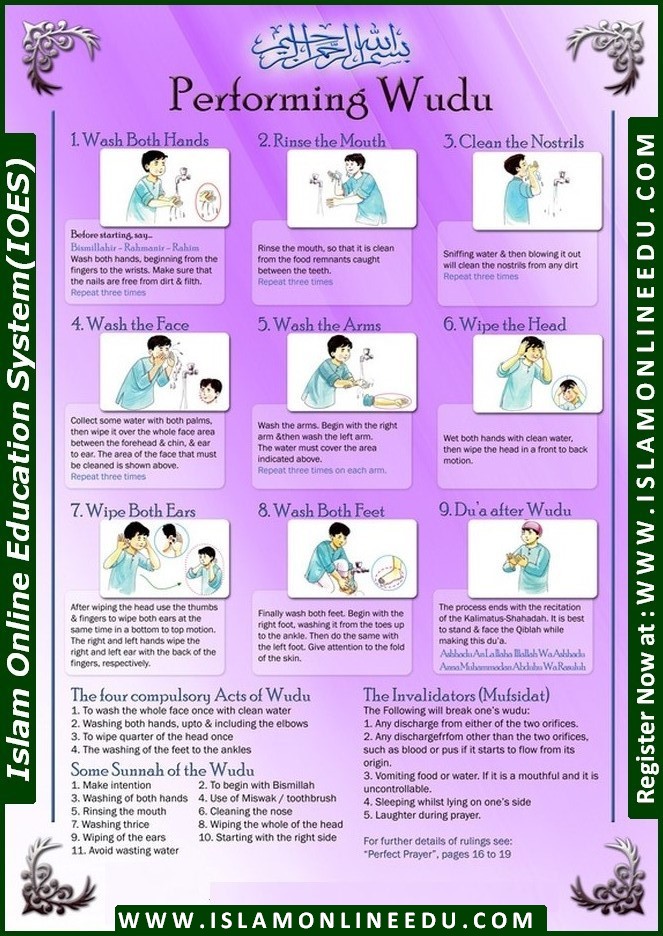
- 4. Performing Complete Wudu: Perform a standard ablution exactly as one would for prayer, rinsing the mouth and nose thoroughly. If water accumulates around the feet on a flat surface, the washing of the feet may be deferred to the conclusion of the bath.
- 5. Pouring Water Over the Entire Body: Pour water three times over the entire head, ensuring it saturates the hair down to the scalp. Next, pour water three times over the right shoulder and side of the body, followed by three times over the left shoulder and side.
- 6. Rubbing the Body (Dalk): Rub the skin with the hands to ensure complete saturation and dispel doubts regarding unwashed spots.
- 7. Step Aside and Wash the Feet: If feet were not washed during the initial Wudu due to gathered water, step aside to clean dry ground and wash both feet thoroughly up to the ankles.
Common Mistakes to Avoid
Many individuals fail to realize that merely taking a routine shower does not fulfill the legal requirements of Ghusl if one neglects rinsing the mouth and sniffing water into the nose. Similarly, waterproof barriers such as nail polish, wax, dense cosmetic coatings, or synthetic adhesives prevent water from contacting the skin and invalidate the bath. Removing all barriers before bathing is indispensable.
Conclusion
Ghusl represents both physical hygiene and spiritual renewal. Understanding its legal essentials under Hanafi Fiqh empowers the Muslim to worship with utter certainty, maintaining holiness and deep devotion before the Almighty.

